Route Dispatch 01 // Highland & Narrow-Gauge

TRACKS INTO HIGH COUNTRY

Where rivers carve deep gorges and monsoon clouds snag against 2,000-metre ridges, railway builders turned to tight curves, spiral loops, and Z-shaped switchbacks. Inside the carriage, the pace slows to a conversational rumble and the air cools with every tunnel exited.

Sri Lanka Main Line: Kandy to Badulla via Nanu Oya & Ella

Originally laid in the late nineteenth century to haul coffee and highland tea down to the port of Colombo, Sri Lanka’s broad-gauge Main Line remains one of the most tactile mountain train rides in the world. Once the locomotive clears Peradeniya Junction outside Kandy, the gradient stiffens and the tropical palms of the lowlands give way to eucalyptus groves, cascading waterfalls, and emerald-green tea bushes trimmed to the edge of the ballast.

Inside the older blue and red rakes—as well as the newer diesel multiple units—the defining sensation is airflow. In second- and third-class carriages with opening window sashes, cool highland mist drifts directly across wooden or vinyl benches. Vendors step aboard at Hatton and Nanu Oya carrying warm spiced vade wrapped in old ledger paper, while stationmasters exchange physical token hoops or signal flags on the platform.

Kandy (500m) Hatton Nanu Oya (1,600m) Pattipola (Summit 1,897m) Haputale Ella

Breaking the Journey: Rather than riding the entire seven-hour stretch from Kandy to Ella in a single sitting, seasoned rail travellers often step off at Nanu Oya (for Nuwara Eliya) or Haputale. The stretch between Nanu Oya, Pattipola summit, and Haputale skirts sheer escarpments where, on clear mornings, you can see all the way toward the southern coast before entering the famous loop at Demodara and crossing the stone masonry of the Nine Arches Bridge.
Alishan Forest Railway (Taiwan) & India’s Mountain Railways

Few lines demonstrate the theatre of elevation change as vividly as Taiwan’s 762 mm narrow-gauge Alishan Forest Railway. Departing from the subtropical plains of Chiayi (30 metres above sea level), the compact red carriages climb through camphor and bamboo forests, spiralling around Dulishan three times before tackling the famous Z-shaped switchbacks at Erwanping to pass above 2,200 metres. Because the train reverses direction on the switchbacks, passengers take turns facing the valley drop and the mossy rock cutting.

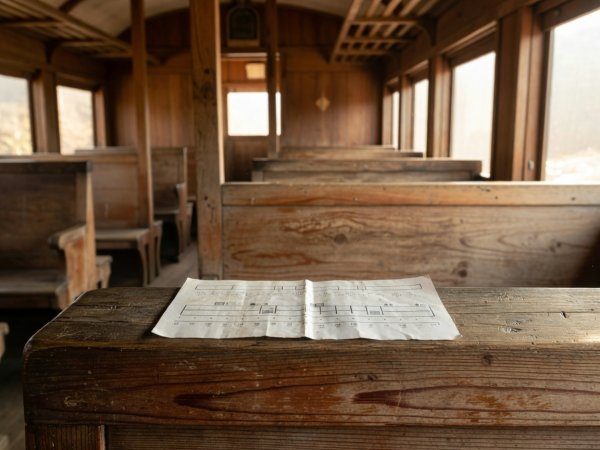
Printed paper ticket and wooden headboard inside an Alishan narrow-gauge carriage

Kalka–Shimla & Darjeeling Himalayan (India)

On the Kalka–Shimla line in Himachal Pradesh, 762 mm carriages cross more than 800 bridges and duck through 102 numbered tunnels over five hours. Further east, the Darjeeling Himalayan Railway uses horseshoe curves like the Batasia Loop and street-running trackage where shopkeepers pull back awnings as the locomotive edges past toward Ghum (2,258 m).

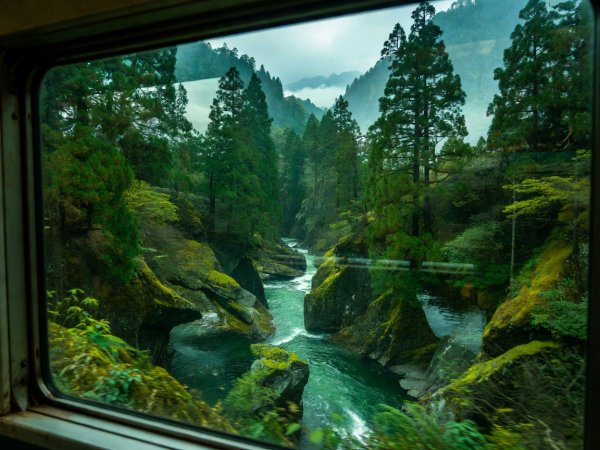
Window frame of a Japanese mountain train reflecting emerald river gorges and cedar trees

Kurobe Gorge, Oigawa & Hida Wide View (Japan)

In Japan’s Northern Alps, the Takayama Main Line (served by the Hida limited express with wrap-around panoramic glass) follows the foaming Hida and Miyagawa rivers from Nagoya through Gifu into Toyama. Nearby, the open-sided Kurobe Gorge Torokko train threads sheer granite canyons accessible only by rail, while Shizuoka’s Oigawa Railway operates rack-and-pinion climbing trains above emerald reservoir lakes.

Seasonal & Weather Verification: Mountain railways are uniquely exposed to monsoon landslips, typhoon maintenance closures, and winter snowpack (for example, the Kurobe Gorge line closes during winter snow months). Always verify current line status with the official operator before travelling to the railhead.